200W 300W 500W Pulse Laser Cleaning Machine  with Air Cooled

200W 300W 500W Pulse Laser Cleaning Machine with Air Cooled

200W 300W 500W pulse laser cleaning machine
Removal Rust,Dust Paint and Oil
Fast Scan Speed Removal
Easy to Operate
Portable Pulse Fiber Laser Cleaning Machine
1.5mJ 5mJ 15mJ 50mJ pulse energy option

FOB Reference Price: Get Latest Price

Laser Power:
  • 200W
  • 300W
  • 500W
Model Number:
  • HS-LC200
  • HS-LC300
  • HS-LC500

Product Description

The prospects and technical principles of laser cleaning


Laser cleaning equipment is a new generation of surface treatment high-tech products, which are easy to install, operate and realize automation. The operation is simple, the power is turned on, and the equipment is turned on, you can clean without chemicals, media, and water. The focus can be manually adjusted, and the surface can be cleaned. The cleaning surface has high cleanliness and can remove resin, paint, and oil on the surface , Stains, dirt, rust, coating, plating and oxide layer, and the industry is widely used, covering ships, auto repair, rubber molds, high-end machine tools, rails, and environmental protection.
Laser cleaning technology refers to the use of high-energy laser beams to irradiate the surface of the workpiece to cause the dirt, rust or coating on the surface to evaporate or peel instantaneously, and effectively remove the adhesion or surface coating on the surface of the cleaning object at a high speed, so as to achieve a clean process. It is a new technology based on the interaction effect of laser and matter.

Technical characteristics
High cleanliness
Can be accurately positioned and cleaned
Non-contact cleaning to protect the surface of brittle materials
Effectively remove micron-level pollution particles
Environmental protection, no consumables required


Embedded suspended laser fiber head and fiber optic cable

We use a design that suspends the laser cleaning head inside the laser cleaning machine. This is to completely protect the laser cleaning head from external interference and prevent it from falling from above the machine and causing serious damage when the laser cleaning machine is not in use. Furthermore, the internal embedding of fiber optic cables and laser cleaning makes the entire pulsed laser cleaning machine more aesthetically pleasing and easier to move.The laser cleaning head weighs 0.65kg, and the handle is designed to be ergonomic. The signal cable and the cable for the laser cleaning head are wrapped with a very strong corrugated tube.The machine has large wheels at the rear and small wheels at the front; this design is primarily for easier movement.


Schneider contactors and Schneider circuit breakers


Schneider Electric components, including Schneider circuit breakers and Schneider contactors, continue to provide high-quality electronic components to safeguard our customers' laser cleaning machines in a highly competitive market environment. Reliable and stable electronic components can extend the lifespan of pulsed laser cleaning machines by 2-3 years.

We have designed automated reserved interfaces for 200W, 300W, and 500W air-cooled pulsed laser cleaning machines, such as safety interlock, safety door, footpedal, and gas in interfaces. You can connect to these interfaces when you want to achieve automated cleaning.


Tricolor light design concept

The three-color light design also takes safety into consideration. When the machine's light turns red, it indicates that the laser cleaning machine is not working and people can approach. When the machine's light turns green, it indicates that the laser cleaning machine is working and unauthorized personnel should not approach. When the pulse laser cleaning machine's light turns yellow, it indicates that the machine is adjusting parameters or waiting to start working.


The control system supports multi-graphic scanning

Lasers can provide high-speed cleaning and surface preparation in virtually all industries. The low-maintenance, easily automated process can be used to remove oil and grease, strip paint or coatings, or modify surface texture, for example adding roughness to increase adhesion.


No abrasive materials are used, with no problems of contaminant separation and disposal

No solvents are used - chemical-free and environmentally friendly process

Spatially selective –  cleaning only the area required, saving time and costs by ignoring regions that don’t matter

Non-contact process never degrades in quality

Easily automated process that can lower operating costs by eliminating labor while giving greater consistency in results.

The laser control system can support 8 different scan shape, different cleaning material that you can chose different scan shape


Why are more manufacturers using laser cleaning for material preparation?

Laser cleaning offers multiple advantages over traditional approaches. It does not involve solvents and there is no abrasive material to be handled and disposed of. Compared with other processes that are less detailed, and frequently manual processes, laser cleaning is controllable and can be applied only to specific areas of a part, can be easily automated to maximize productivity, and provides the guaranteed repeatability demanded by an increasing number of quality standards.

The laser head come with 2 red guider which easy to find the cleaning focus, also the rotate screenis option.


Elimination of Chemical Solvents


Handling and disposal of hazardous chemical solvents is eliminated by laser cleaning. The reduction in costs of consumable solvents and the expensive


requirements for post process treatment and disposal of these chemicals are not a factor for laser cleaning, making it both the environmentally preferred


and lowest cost solution.


Controllable Non-Damaging Process


Laser cleaning provides greater levels of control than are available for any competing process. The highly focusable and steerable laser beam can be


directed precisely as desired, while sensitive and repeatable power settings deliver only the amount of energy that is called for. The range of  fiber


lasers includes pulsed models specifically designed to produce optimum cleaning results with a minimum of heat generation.


Reduction in Waste Products


Laser cleaning is a non-contact process that removes only the unwanted materials. With no abrasives or secondary components involved, laser cleaning


produces fewer types and lower quantities of waste products than any other cleaning process. Less waste materials means lower process costs.


Pulsed Laser Cleaning Machine Application Industries

Pulsed Laser Cleaning Machine Application Industries

I. Automotive Manufacturing Industry

Automotive Parts: Rust removal from wheel hubs, oxidation removal from brake discs, paint and oil removal from chassis parts

Body Manufacturing Processes: Removal of weld spots from weld seams, partial paint removal, rust removal from sheet metal

Automotive Parts Molds: Cleaning of carbon deposits, oil stains, and coatings from headlight molds and interior parts molds

II. Shipbuilding / Marine Engineering Industry: Rust removal from ship decks and plates, removal of marine organisms, and peeling of anti-corrosion paint. Cleaning of oxide scale and oil stains from ship engines, flanges, and precision components. Refurbishment and cleaning of anti-corrosion coatings for offshore wind power equipment. Aerospace Industry: Oxide removal, paint stripping, and oil removal from aircraft fuselages and aluminum alloy structural components. Cleaning of high-temperature carbon deposits and plating from aero-engine blades and precision parts. Non-destructive rust and scale removal (high precision, non-damaging) from aerospace composite materials and metal components. Mold Manufacturing Industry: Injection molds, die-casting molds, rubber molds, tire molds. Cleaning: Surface carbon buildup, rubber residue, plastic burrs, mold release agents, and oxide spots; no grinding required, does not damage mold cavities. Hardware and Machinery. General Equipment Manufacturing
Rust removal, scale removal, and welding spot removal for carbon steel, stainless steel, and alloy steel workpieces
Oil stain and rust refurbishment for mechanical gears, shafts, and bearing seats
Fine cleaning of surface coatings and stains for metal stamping parts and sheet metal parts


VI. Rail Transit Industry
High-speed rail, subway, and trains: Rust removal from car body steel structures, oxidation cleaning of track components, paint removal and refurbishment of carriage components, and cleaning of welding slag at welded joints


VII. New Energy Industry
Lithium batteries: Electrode coating cleaning, cell casing oxidation and rust removal, and welding area cleaning
Photovoltaic industry: Cleaning of aluminum alloy oxide layer, adhesive layer, and stains on photovoltaic frames
Rust and paint removal for energy storage equipment, wind turbine towers/wind turbine blades


VIII. Precision Electronics/Semiconductors
Non-destructive cleaning of precision electronic components, copper and aluminum terminals, circuit board localized oxidation, plating residue, and minor stains; no damage to substrate, no dust


IX. Steel Structure/Construction Engineering
Steel structures, steel frames, bridges, railings, and iron towers: Large-area rust removal, old paint removal, and anti-corrosion pretreatment


X. Petrochemical/ Pipeline Industry
Oil pipelines, storage tanks, valves, refining equipment: removal of oil stains, rust, and anti-corrosion coatings; equipment maintenance and refurbishment.


XI. Kitchenware, Bathroom & Home Appliance Industry
Stainless steel kitchenware, faucets, bathroom hardware, home appliance casings: pre-polishing oxidation removal, weld spot cleaning, surface blackening treatment.


XII. Cultural Relics/Crafts Restoration
Ancient bronzes, ironware, stone carvings, ancient architectural components: gentle rust removal, removal of old stains, weathering layer cleaning; non-destructive protection of cultural relics.


XIII. Military and Weapon Industry
Gun parts, military metal components, armor parts: rust removal, paint removal, carbon deposit removal; refined maintenance and cleaning of precision military components.


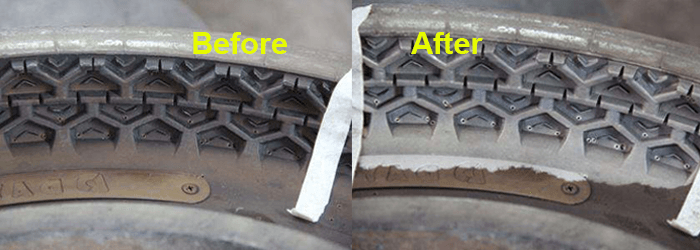
XIV. Rubber and Tire Industry
Rapid cleaning of residual rubber, carbon deposits, and dirt from giant tire molds and rubber molding molds; improving product molding precision.


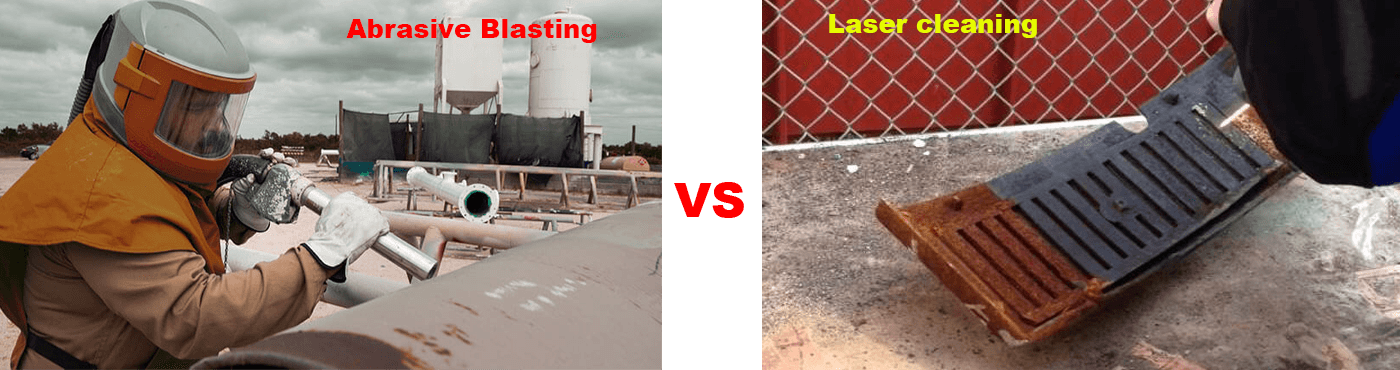
Abrasive Blasting vs Fiber Laser Cleaning


While the cleaning is easy and effective, cost lies in the collection and disposal of the blast media, which often has to be separated from the paint debris, which has its


own treatment issues. Fiber lasers eliminate the blast media problem. They provide a more controlled process that does not accidentally damage a surface through


excessive removal, and can also be used on thin and composite materials that would be damaged by the particle impact. Fiber laser cleaning is always consistent,


independent of operator effects, and can scale to suit the job size by selection of the laser power.


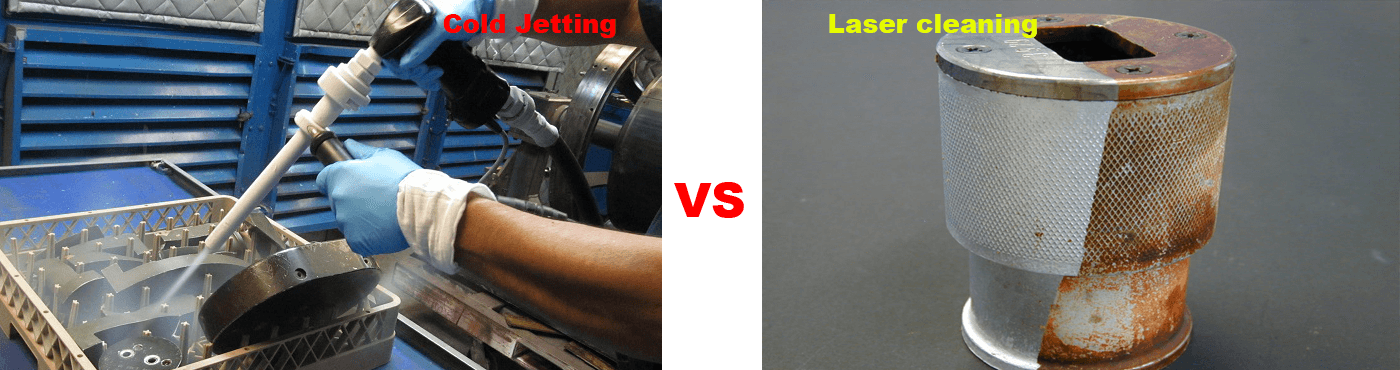
Cold Jetting vs Fiber Laser Cleaning


Also known as dry ice blasting, cold jetting has similar characteristics to abrasive blasting, but without the problems of abrasive material recovery and disposal.


Fiber laser cleaning has little risk of operator hearing damage, has no special ventilation requirements, and is more easily controlled when dealing with small parts.


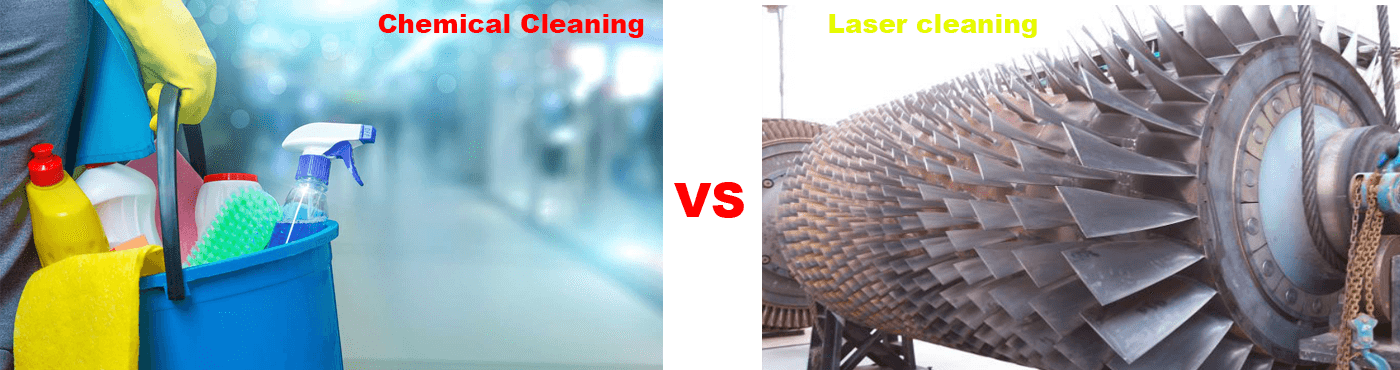
Chemical Cleaning vs Fiber Laser Cleaning


Good for cleaning surface contamination from a whole part, chemical cleaning is not easily applied to a selective area. Disposing of the chemicals is


an increasingly difficult and costly challenge due to regulatory controls. Fiber lasers can be applied selectively. With no chemicals to degrade, quality


is consistent, and there are no chemical solvent disposal issues. With no drying time, parts are available immediately.


Technical parameters

Technical Parameters

Model number: HS-LC200 / HS-LC300 /HS-LC500

Power supply:Single-phase 110V and 220V±10%, 50/60Hz AC

Laser power: 200W 300W 500W 

Whole machine power consumption: 850W 1300W 2000W

Laser type: Pulse laser technology 

Working environment humidity:30%~80%

Laser wavelength: 1064±5nm

Fiber length: standard 5mm / acceptable customized

Laser energy: 1.5mJ 5mJ  15mJ 50mJ option

Clean head weight:0.7kg

Pulse Width: 13-500 ns

Move method: handheld 

 Frequency: 1-4000 KHz

Scan width: F160 or F254  90mm or 145mm 

Power adjustment range: 10 to 100% adjustable

Suitcase color:silver-gray

Laser source type: Pulse type laser source

Cooling syste: air cooling 

Fiber core:100 μm

Machine Weight: 56kg

Focus distance:100 /160 mm

Whole machine weight: 830x380x820mm

Working temperature:0℃~40℃

Packing size: 930*480*920mm

Place the environment:Flat, no vibration, no impact

Packing weight: 76kg

Video

Clean Samples Display

Cultural Relics Restoration


Surface treatment and repair of wooden furniture


Wall graffiti, stone surface treatment


Surface cleaning treatment in the mold industry


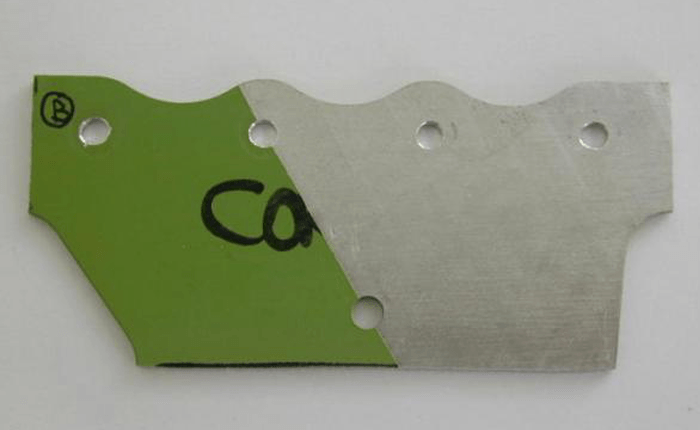
Coating paint removal 


Send your message to this supplier

Recommend matching suppliers if this supplier doesn’t contact me on Message Center within 24 hours.

×

Contact Us

captcha

By continuing to use the site you agree to our privacy policy Terms and Conditions.

I agree